
Supplements
Supplements.
Made simple.
Clear guides to ingredients, labels and everyday choices.
Browse by category


Start with the basics

How to read a label
A clear walkthrough of ingredient lists, serving sizes and the key things to look for.
What testing tells you
A simple guide to common tests, what they show and why they matter.
Compare cost per serving
Learn how to work it out, what to consider and how to make a fair comparison.
Know how we compare
See how our guides are researched and how affiliate links work.
Protein powders: start with the label
A useful comparison starts with the same information for each powder. Note the ingredients, the stated serving size and the amount of protein in that serving.
What to compare
- The full ingredient list: read beyond the front of the tub and check any allergens, flavours and added ingredients.
- The serving: note how many grams of powder make up the stated serving. A bigger scoop changes the comparison.
- The cost: use the number of stated servings in the pack, rather than comparing the price of the tub alone.
Vitamins & minerals: compare the details
Look at the nutrients named on the label, the amount of each per stated serving and how many tablets, capsules or drops make up that serving.
What to compare
- Amounts and units: write down the stated amounts and units so you compare the same thing across products.
- The serving size: an amount may refer to several tablets or capsules, rather than just one.
- The complete formula: check the full list of nutrients and other ingredients, along with the manufacturer’s directions.
Whether you need a supplement is a separate question from which product to buy. For general information, start with the NHS guide to vitamins and minerals; a pharmacist or qualified clinician can help with personal questions.
Omegas: look beyond the bottle size
For an omega product, start with the oil source, the named ingredients and the amounts per stated serving. Keep those details beside the price when comparing bottles.
What to compare
- The contents: record the named oils and ingredients, rather than relying on the description on the front of the bottle.
- The stated serving: note whether the label’s figures apply to one capsule, several capsules or a measured amount of liquid.
- The pack: compare the stated number of servings, the manufacturer’s directions and the full ingredient and allergen information.
Creatine: compare like with like
Record the creatine named on the label, its stated amount per serving and the complete ingredient list. A powder, capsule and blended product may have different serving sizes.
What to compare
- The formula: check whether the product lists one ingredient or a blend, and note the amount of each named ingredient.
- The serving: use the stated serving weight or capsule count when comparing packs.
- The evidence for a claim: identify who makes the claim and what published information it refers to. For testing, look for a named report or certification and check its scope.
How to read a label
Turn the bottle or tub around. The full label is where you can check what a product contains, how the manufacturer describes a serving and what instructions come with it.
Five checks before comparing products
- Ingredients: read the complete list, including any allergens and added ingredients.
- Amounts: note which figures are per serving and which are per tablet, capsule or other unit.
- Serving size: check how many tablets, capsules or grams make up the stated serving.
- Directions: read the manufacturer’s instructions, storage information and warnings.
- Claims: separate what the manufacturer says from the published information or testing used to support it.
Keep the same notes for each product. That makes differences in serving size, ingredients and pack size easier to spot.
Further reading: Food Standards Agency guidance on food supplements.
What testing tells you
“Tested” is a starting point for a question: tested for what, by whom and on which product? Look for a named, relevant test or certification and verify what it covers.
Read the scope
- Identify the test: find the organisation, laboratory or certification scheme named by the brand.
- Match the product: check whether the information names this product or batch, and whether a date is given.
- Check what was measured: a report about contents answers a different question from a study about a claimed effect.
- Read the result: follow the issuer’s explanation of the test and avoid treating a broad badge as a complete answer.
How NutriStrain will describe its guides
Our guides will make clear whether a product was tested in person, researched from published information, supplied by a brand or linked through an affiliate programme. Research will be described as research.
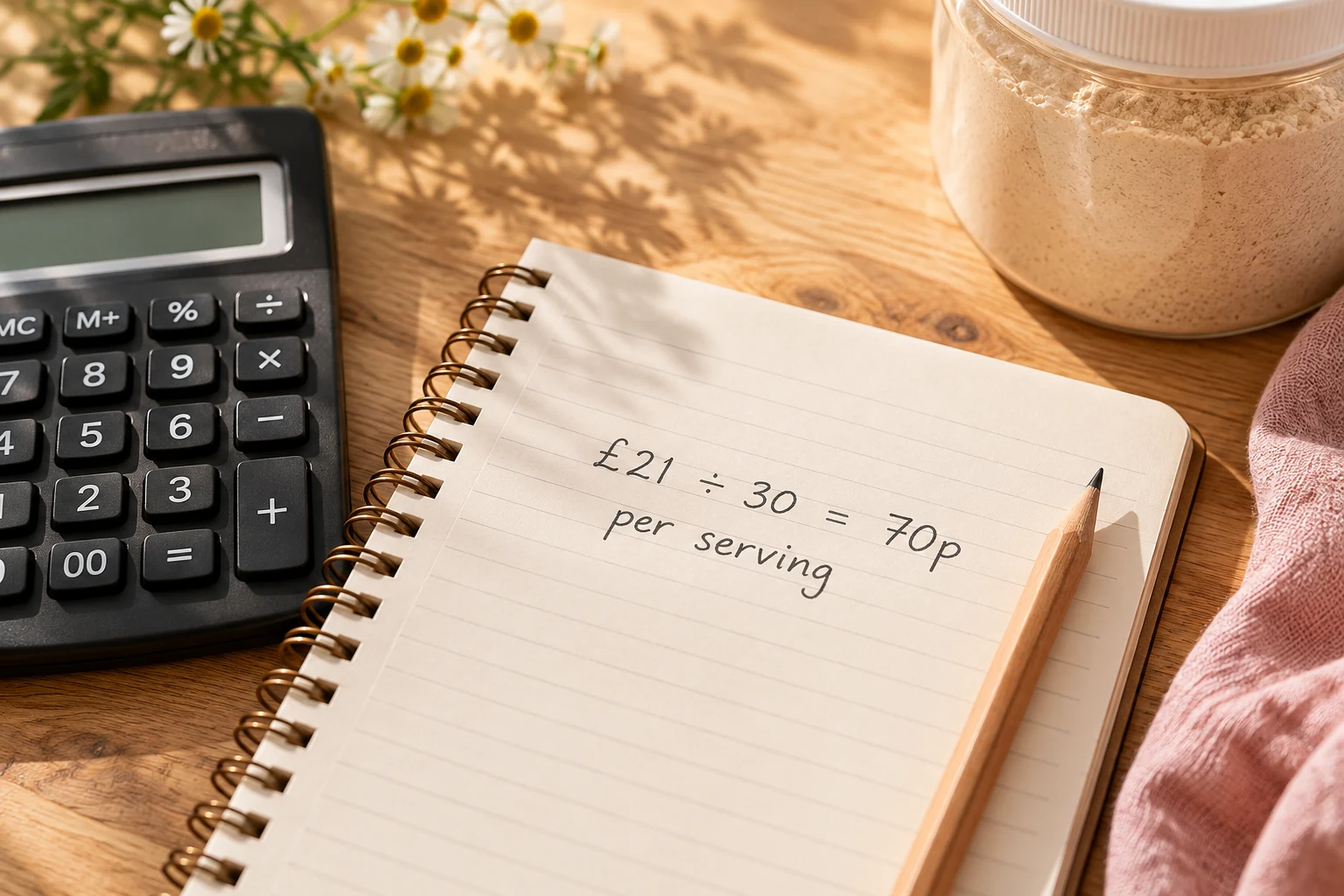
Compare cost per serving
Use the number of stated servings in the pack to turn the headline price into a more useful comparison. Include delivery when it changes the amount you actually pay.
The calculation
Total cost ÷ stated servings = cost per serving.
For example, a pack costing £18 plus £3 delivery, with 30 stated servings, costs £21 ÷ 30 = £0.70 per serving. This is an illustration, rather than a price for a particular product.
Make the comparison fair
- Check the serving size: a lower cost per serving may come with a different amount of the ingredient you are comparing.
- Use the price you can actually pay: distinguish a one-off purchase from a subscription or introductory offer.
- Include the extras: factor in delivery and any minimum-order requirement that affects the cost.
Cost per serving helps explain price. It does not establish whether a product is suitable for you or whether you need a supplement.